
MetricStream makes it easy for organizations to manage and monitor compliance with multiple regulations and established security standards, including the CMMC framework. Rapidly comply with CMMC certification by consolidating compliance data in a centralized repository, while harmonizing controls across multiple IT standards and compliance requirements with a ‘test once, comply with many’ approach. Achieve quick deployment with pre-packaged content and integrations with CMMC requirements, controls, and mappings.

Optimize CMMC Framework Compliance
Strengthen Cyber Resilience, Protect Against Attacks and Reassure Your Customers

Simplify Compliance with CMMC Certification Framework
MetricStream makes it easy to manage and monitor compliance with multiple regulations and established security standards, including the CMMC framework. Rapidly comply with CMMC certification by centralizing compliance data, while harmonizing controls across multiple IT standards and compliance requirements with a “test once, comply with many” approach. Deploy quickly with pre-packaged content and integration with CMMC requirements, controls, and mappings. Gain 360-degree visibility of your compliance profile with automated IT compliance management workflows, pre-defined, real-time reports and user-specific dashboards.
How Does MetricStream Help You with CMMC Compliance?
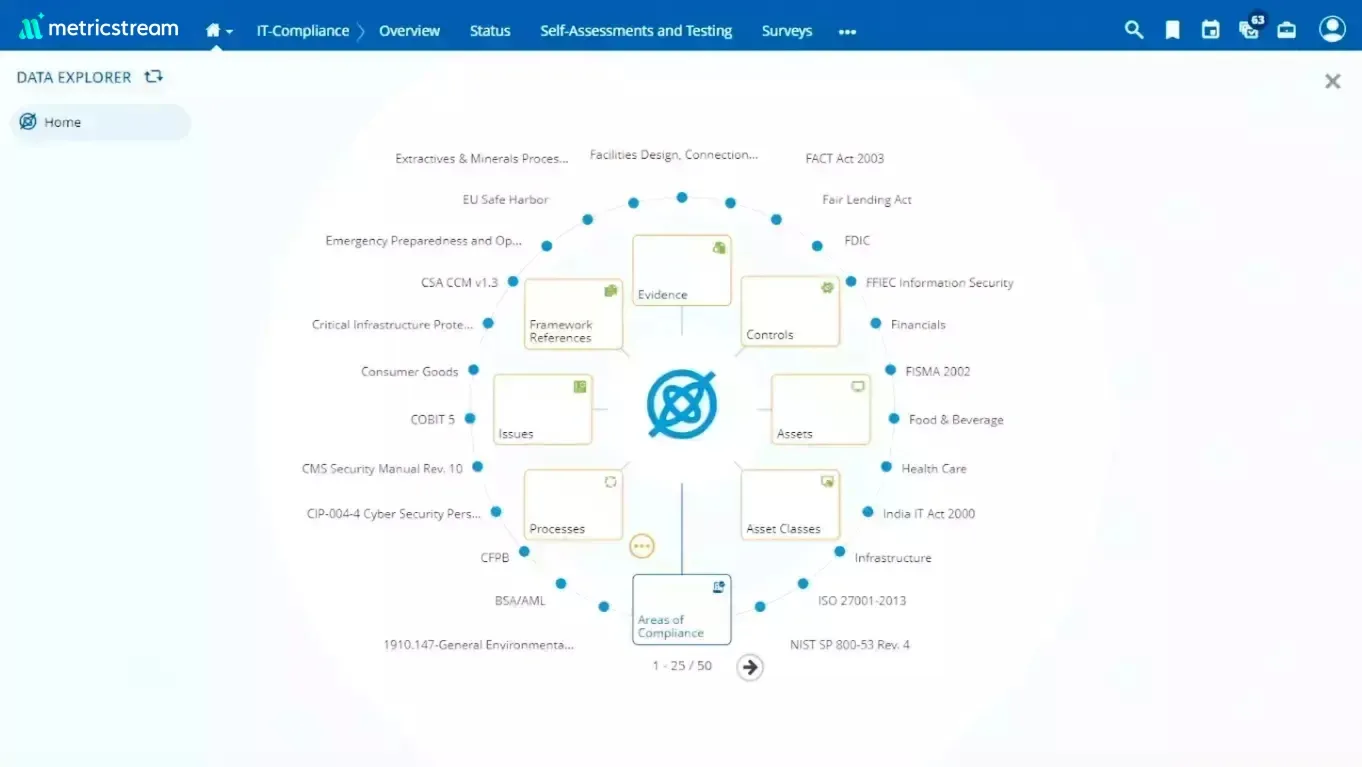
Centralized IT Compliance Environment
Easily map processes, assets, risks, and controls to regulations and policies as per the CMMC framework. Monitor IT compliance processes, assess control deficiencies, and manage remediation with a centralized, access-controlled environment. Gain top-level visibility into the relationship between IT risk and IT compliance across the organization.
Harmonization Across Various Compliance Requirements
Save efforts and costs associated with CMMC certification compliance management by harmonizing controls across multiple IT regulations and frameworks. Utilize the integration between the Unified Compliance Framework (UCF) and the MetricStream GRC library to enable dynamic linking of IT regulations with UCF control statements.
Advanced IT Compliance and Controls Assessments
Effectively manage IT compliance controls and assessment activities by linking to specific regulatory requirements. Leverage pre-defined criteria and checklists to schedule automatic assessments. Perform control tests with user-friendly interfaces and attach evidence of findings as well as score, tabulate, and report the results efficiently.
Structured Self-Assessments and Surveys
Easily perform IT compliance surveys, certifications, and control self-assessments with pre-defined templates and schedules. Effectively consolidate and analyze survey and assessment results data and gain valuable insights for better informed decision-making.
Intelligent Issue and Remediation Management
Automate workflows for documenting, investigating, and resolving IT compliance and control issues. Classify issues quickly and intuitively with AI/ML. Ensure quick remediation of actions with automatic alerts to relevant stakeholders and track progress to closure.


What Benefits Can You Expect?
- Successfully demonstrate IT compliance with CMMC to the Department of Defense (DOD) and your customers
- Gain significant operational efficiencies through harmonization of controls across standards and frameworks
- Drive better decision-making with a unified, real-time view of your organization’s IT compliance status
- Stay agile by leveraging real-time tracking of changes in regulatory standards and controls








Frequently Asked Questions
CMMC 2.0 Phase 2 begins on November 10, 2026, one year after Phase 1 introduced Level 1 and Level 2 self-assessment requirements into new Department of Defense (DoD) contracts. Phase 2 requires most contracts involving Controlled Unclassified Information (CUI) to include mandatory Level 2 certification by a Certified Third-Party Assessment Organization (C3PAO), replacing self-assessment as the default path. Select Phase 2 procurements may also introduce Level 3 requirements. Organizations should confirm their required certification level and begin C3PAO scheduling well ahead of this deadline, given limited assessor availability.
CMMC 2.0 defines three certification levels based on the sensitivity of information handled: Level 1 (Foundational), which applies to contractors handling Federal Contract Information (FCI) and requires an annual self-assessment; Level 2 (Advanced), which applies to Controlled Unclassified Information (CUI) and generally requires third-party certification; and Level 3 (Expert), which applies to the most sensitive programs and requires government-led assessment by the Defense Industrial Base Cybersecurity Assessment Center (DIBCAC). Most defense contractors handling CUI fall under Level 2 requirements.
CMMC 2.0 Level 2 requirements closely follow the 110 security controls defined in NIST Special Publication (SP) 800-171, Revision 2, while Level 3 adds 24 enhanced controls from NIST SP 800-172. This alignment allows organizations that already maintain NIST-based cybersecurity programs to apply much of that work toward CMMC certification. Contractors should conduct a gap analysis comparing their current controls against the applicable NIST baseline before scheduling a certification assessment. Harmonizing controls across NIST and CMMC reduces duplicated compliance effort.
CMMC certification applies to Department of Defense (DoD) contractors and subcontractors that process, store, or transmit Federal Contract Information (FCI) or Controlled Unclassified Information (CUI). By October 31, 2026, new and renewing DoD contracts involving FCI or CUI are expected to list specific CMMC requirements as a condition of contract award. Full implementation across all applicable contracts and option periods arrives by November 10, 2028. Existing contracts are not permanently exempt, since renewals, option exercises, and recompetes trigger CMMC requirements at the applicable phase.
Defense contractors using MetricStream to manage CMMC compliance gain a centralized system for mapping CMMC practices to existing NIST-based controls, tracking assessment readiness, and monitoring remediation progress through Plans of Action and Milestones (POA&Ms). This harmonized approach reduces the duplicated effort of maintaining separate documentation for CMMC, NIST SP 800-171, and other frameworks. Real-time dashboards give compliance teams visibility into certification status across contracts and subcontractors ahead of Phase 2 deadlines. Centralizing this data also supports faster response when contracting officers request evidence of compliance.