





Top 5 Security Risk Assessment Tools in 2026
- IT Risk & Cyber Risk
- 19 January 26



Introduction
In today’s digital-first landscape, security threats have escalated in complexity and frequency. Organizations are exposed to an array of vulnerabilities—software misconfigurations, supply chain risks, insider threats, and compliance gaps—any of which can cause significant damage. Security risk assessment tools help organizations identify these threats early, prioritize remediation efforts, and maintain resilience against both known and emerging risks. This blog highlights the top five tools in 2026, exploring what makes them stand out and how to implement them effectively.
Key Takeaways
- IT and cyber risk management tools are essential for safeguarding digital infrastructure, ensuring compliance, and enabling informed decision-making in an increasingly complex threat environment.
- Automation, integration, and scalability are must-haves—modern tools now connect seamlessly with ITSM platforms, cloud infrastructure, and third-party services, reducing manual effort and increasing reliability.
- Effective risk management requires a balance of proactive monitoring, reactive controls, and cross-functional visibility, all of which the best tools now support.
- Evaluation criteria should include user experience, regulatory coverage, automation potential, integration support, and risk analytics, tailored to the organization’s size and industry.
- Common implementation barriers like data migration issues, resistance to change, and lack of internal expertise can be addressed with strong vendor onboarding, phased deployments, and ongoing training.
- Success metrics include reduced incidents, improved audit scores, time and cost savings, and increased adoption across teams—not just IT or security departments.
- Future trends are redefining the space, with AI-driven predictive modeling, unified risk ecosystems, privacy-security convergence, and low-code platforms democratizing access and efficiency.
- Choosing the right tool is a strategic decision—done right, it strengthens resilience, enhances governance, and positions the organization for sustainable growth in an evolving digital landscape.
Key Features of Security Risk Assessment Tools
Security risk assessment platforms come with a core set of functionalities to help build an effective security posture. Here are 6 key features to look for while choosing a robust security risk assessment tool:
- Automated Vulnerability Scanning: Employs both network and host-based scanning agents to continuously identify vulnerabilities, from outdated software patches and misconfigured firewalls to weak SSH credentials or default passwords.
- Threat Intelligence Integration: Leverages curated feeds of real-world threats (e.g., zero-day exploits, attack activity) to help contextualize vulnerability data and prioritize remediation efforts based on actual exploitability and industry relevance.
- Quantitative Risk Prioritization: Assigns numerical scores using frameworks like CVSS and Monte Carlo simulations, accounting for asset value, threat likelihood, and potential business impact to help focus security investments where they matter most.
- Compliance Mapping: Aligns identified gaps with regulatory frameworks such as HIPAA, PCI‑DSS, GDPR, or ISO 27001. Built-in templates reduce manual mapping and automatically generate compliance reports for internal or external audits.
- Integrated Reporting and Dashboards: Presents executive dashboards, heatmaps, and detailed trend reports to show risk exposure over time. Built-in filters enable easy drill-down by asset group, control type, or vulnerability severity.
- DevSecOps Integration: Provides APIs and build-time plugins to integrate risk scanning within CI/CD pipelines. Alerts developers to remediate code or configuration issues early in the development cycle, reducing deployment-related vulnerabilities.
Top 5 Security Risk Assessment Tools
These 5 tools lead the market by helping organizations identify, quantify, and mitigate cybersecurity risks with greater accuracy and operational efficiency.
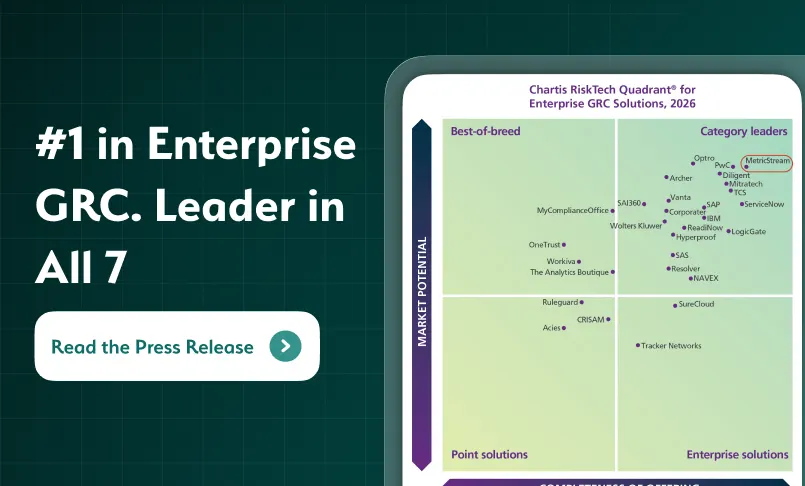
MetricStream
MetricStream is a widely adopted GRC and risk assessment platform trusted by large enterprises, especially in highly regulated sectors like finance, healthcare, and energy. It delivers an integrated approach to risk, audit, compliance, and cybersecurity, helping organizations strengthen resilience and accountability.
Key Features:
- AI-First Cyber and IT Risk and Compliance Management: MetricStream enables organizations to proactively safeguard their business against cyber risks. Powered by AI, the solution streamlines and automates cyber risk assessment, monitoring, and mitigation across IT and OT environments, empowering your enterprise to stay resilient.
- Comprehensive Risk Mapping: Uses a federated data model to map over 9,300 control statements to 1,200+ regulations using the Unified Compliance Framework (UCF).
- Automated Risk Assessments: Streamlines evidence collection, control testing, and risk scoring with automation.
- Real-Time Risk Visibility: Customizable dashboards and AI-driven analytics provide insights into emerging threats and vulnerabilities.
- Regulatory Intelligence: Continuously updated libraries for GDPR, HIPAA, PCI-DSS, NIST, and others.
- Scalable Architecture: Suitable for global organizations with multiple business units and compliance needs.
MetricStream stands out for its AI capabilities and powerful analytics, making it ideal for organizations with complex governance and risk management frameworks.
RiskLens
RiskLens, with its cybersecurity risk quantification platform, benefits enterprises looking to translate technical risk into business terms that influence strategic decisions.
Key Features:
- Risk Quantification in Monetary Terms: Converts cyber threats into dollar-value impact assessments.
- Scenario Modeling: CSimulates various risk scenarios to prioritize mitigations based on ROI.
- Compliance Support: Aligns with frameworks like NIST CSF, ISO 27001, and others.
- Stakeholder Dashboards: Communicates risk metrics clearly to executives and board members.
Qualys VMDR (Vulnerability Management, Detection & Response)
Security teams sometimes use Qualys VMDR for risk mitigation. The cloud-based platform integrates vulnerability management with asset discovery and threat detection.
Key Features:
- Automated Asset Discovery: Continuously scans your entire environment for assets and vulnerabilities.
- Prioritization Using Threat Intelligence: Ranks risks based on real-world exploitability and business criticality.
- Patch Management Integration:Facilitates remediation directly from the platform.
- Customizable Reports and Dashboards: ATailored views for IT, security, and compliance teams.
This solution is built for modern DevOps teams, offering seamless integration between software development and real-time compliance monitoring.
Tenable.io
Ideal for organizations with large digital footprints across cloud, containers, and on-premise systems, Tenable offers continuous monitoring and vulnerability assessment for modern, hybrid IT environments.
Key Features:
- Predictive Prioritization: Uses machine learning to score risks based on threat likelihood and asset value.
- Asset Inventory: Provides full visibility into cloud and on-prem infrastructure.
- Policy Compliance: Maps findings to regulatory standards for easy audit preparation.
Archer (formerly RSA Archer)
As a risk platform, Archer helps organizations manage different risk domains — including operational, IT, and third-party — through a flexible architecture.
Key Features:
- Centralized Risk Register: Allows tracking, scoring, and remediation of risks in one place.
- Custom Risk Models: Tailors assessment methods to your organization’s structure and objectives.
- Workflow Automation: Simplifies incident reporting, audit tracking, and control assessments.
- Integrated Reporting: Real-time metrics and heatmaps for executive visibility.
Criteria for Evaluating Security Risk Assessment Tools
Here are the 7 main factors to consider when selecting a tool:
- Breadth of Coverage: Ensure tools scan across endpoints, cloud assets, networks, containers, and vendor systems to avoid blind spots.
- Contextual Prioritization: Look for intelligence-driven scoring that adjusts severity based on exploit likelihood, asset criticality, and business impact.
- Compliance Support: Prioritize tools with pre-built mappings to regulations relevant to your industry, with self-updating content based on policy changes.
- Integration Ecosystem: Tools should integrate with SIEMs, ticketing systems, patch tools, and DevOps pipelines to close the detection-to-remediation loop.
- Configurability: Custom risk models, dynamic dashboards, user roles, and adjustable thresholds allow tools to grow with organizational maturity.
- Usability: An intuitive user interface, guided workflows, and collaboration tools (e.g., comments, attachments, reminders) maximize adoption.
- Vendor Support and Maturity: Evaluate the vendor’s track record, update cadence, training availability, and community engagement to ensure long-term viability.
Benefits of Using a Security Risk Assessment Tool
In today’s hyperconnected environment, cyber threats are no longer isolated IT concerns—they’re business risks. A dedicated security risk assessment (SRA) tool enables organizations to move from reactive security measures to proactive, data-driven risk management. These tools not only help identify vulnerabilities but also provide the structure, automation, and insight needed to prioritize and mitigate threats efficiently.
Here are 10 ways they can benefit any enterprise:
Holistic Visibility Into Security Posture
Security risk assessment tools offer a centralized dashboard that aggregates threat intelligence, vulnerability data, and risk scores across systems, departments, and geographies. This unified view enables stakeholders to understand where the organization is most vulnerable—whether it's outdated infrastructure, poor configurations, or third-party dependencies.
Example: A bank can use a tool to assess and visualize risks across their mobile banking app, internal systems, and vendor APIs all in one place.
Data-Driven Decision-Making
Rather than relying on gut feeling or fragmented reports, these tools offer quantifiable insights—often aligned with models like FAIR—that allow CISOs and business leaders to assess the financial impact and likelihood of a cyber incident. This makes it easier to justify security investments and prioritize the most pressing threats.
Example: Knowing that one threat vector could result in $2 million in potential losses while another might cost $50,000 allows smarter budget allocation.
Improved Regulatory Compliance
With global regulations like GDPR, HIPAA, ISO 27001, and PCI-DSS becoming stricter, risk assessment tools help map internal controls to specific compliance requirements. This simplifies audit preparation, generates real-time compliance reports, and reduces the risk of non-compliance penalties.
Example: Tools like MetricStream or Archer can auto-map policies to controls and trigger alerts when there's a gap in compliance coverage.
Automation of Manual Processes.
Many risk management processes—like risk scoring, evidence collection, and compliance checks—are time-consuming and error-prone when done manually. SRA tools streamline and automate these workflows, reducing both human error and resource drain.
Example: An automated risk assessment can trigger control testing workflows, gather results, and notify owners of high-risk gaps—all without manual coordination.
Faster Threat Response
Integrated threat intelligence, real-time monitoring, and alerting capabilities allow teams to spot anomalies and respond to emerging threats much faster. Many tools also integrate with ticketing or SIEM systems to ensure seamless handoffs between risk and security operations.
Example: A vulnerability detected in a cloud container can automatically trigger remediation tasks and notify security analysts.
Better Communication Between Technical and Business Teams
Security risk tools often include visual dashboards, heatmaps, and board-level reports that help translate technical risks into business language. This fosters better alignment between IT, compliance, and executive teams.
Example: A CISO can present a dashboard showing reduced risk exposure over time, helping the board understand ROI from recent cybersecurity investments.
Scalability Across the Organization
Whether you’re a startup scaling rapidly or a global enterprise with multiple divisions, these tools can adapt to your risk appetite and operational model. Cloud-based platforms especially offer scalability without compromising performance or data integrity.
Example: As your business expands into new markets or adopts new technologies, the tool can assess risks across cloud-native apps, third-party vendors, or IoT devices.
Enhanced Incident Preparedness
Some tools include scenario simulation and tabletop exercises that help organizations test their resilience against various attack types (e.g., ransomware, insider threats, DDoS). These simulations help improve incident response planning and identify gaps before a real crisis hits.
Example: A simulated phishing attack can help measure employee response times and preparedness levels across departments.
Reduced Costs and Fines
By identifying and remediating vulnerabilities early, companies can avoid costly breaches, minimize business disruptions, and reduce regulatory fines. Over time, this proactive approach lowers the total cost of ownership (TCO) for cybersecurity initiatives.
Example: Preventing a $500,000 ransomware incident through early patching pays for the tool many times over.
Continuous Improvement
Leading tools enable organizations to track key risk indicators (KRIs) and build a feedback loop into their cybersecurity programs. This encourages continuous refinement of controls, risk scoring models, and team performance.
Example: Tracking trends in recurring vulnerabilities can help revise internal policies and awareness training modules.
Common Challenges in Implementation
Understanding these 6 common roadblocks helps organizations prepare better and avoid costly missteps.
Change Resistance
Teams often resist switching from familiar spreadsheets or outdated tools, especially when they don’t understand the value of the new system. Risk professionals, IT staff, and even executives may feel overwhelmed by the learning curve or skeptical of automation.
Data Migration Complexity
Risk data is often scattered across spreadsheets, emails, siloed tools, and legacy systems. Consolidating and cleaning this data for a centralized platform can be time-consuming, technically challenging, and prone to errors.
Over-Customization Risks
It’s tempting to customize every workflow, field, or report to match internal preferences. But over-customization can create fragile systems that are hard to maintain, upgrade, or scale across the organization.
Skill Gaps and Training Needs
SRA tools often include advanced features like AI-driven risk scoring, dynamic workflows, and integrated compliance frameworks. Without proper training, users may underutilize the tool or introduce errors.
Integration Hurdles
Most organizations rely on a mix of legacy IT systems, third-party apps, and cloud services. Getting the SRA tool to talk to all relevant platforms—via APIs, plugins, or middleware—can be tricky.
Lack of Executive Buy-In
Without top-level support, implementations risk being deprioritized or underfunded. Executives may not fully grasp the ROI of better risk visibility and automation.
How to Gauge the Success of Implementation
Measure implementation success through both objective metrics and qualitative indicators of adoption and impact. Here are 6 ways to gauge if your tool is being used successfully:
Reduction in Risk Events
Track the frequency and severity of security incidents, data breaches, and compliance violations before and after implementation. A downward trend shows that the tool is helping prioritize and mitigate risks effectively.
Metric Examples:
- Decrease in critical vulnerabilities left unpatched
- Fewer failed audits or compliance gaps
Time and Resource Efficiency
One of the core promises of an SRA tool is to automate repetitive tasks. Success can be measured in the time saved on risk assessments, audits, and reporting.
Metric Examples:
- Time to complete a risk review drops from 3 weeks to 5 days
- 40% reduction in manual effort for compliance documentation
User Adoption and Engagement
Even the most powerful tool fails if teams don’t use it. High login frequency, task completion rates, and positive feedback indicate successful onboarding and adoption.
Metric Examples:
- 80%+ of risk owners log in weekly
- 90%+ of assigned risk tasks are completed on time
Enhanced Audit and Compliance Outcomes
If your audits become smoother, with fewer findings and faster response times, your implementation is clearly making an impact.
Privacy-First Architectures
With global privacy laws tightening, modern compliance platforms are emphasizing data minimization, consent tracking, and customer-centric control features to ensure transparency and trust.
Metric Examples:
- Shorter audit cycles
- Increased number of “compliant” control ratings
Cost Avoidance and Breach Reduction
Success can also be tied to monetary savings—especially from avoided regulatory fines, legal fees, business disruption, and reputational damage.
Metric Examples:
- Avoided $100K in fines by proactively identifying non-compliant vendors
- Prevented system downtime due to early vulnerability detection
Executive Visibility and Decision-Making
If dashboards and reports from the SRA tool are being used in executive meetings or board reviews, that’s a strong sign of strategic value.
Metric Examples:
- Risk heatmaps included in quarterly board updates
- CISO or CRO able to make faster, data-backed decisions
Trends Shaping the Future of Security Risk Assessment Tools
Below are 7 key trends influencing how these tools will function in 2026 and beyond.
AI-Driven Risk Prediction and Automation
Security tools are increasingly using machine learning and AI to assess behavioral anomalies, auto-prioritize risks, and even recommend mitigation strategies. Predictive analytics allows for proactive risk management, not just reactive remediation.
Example:
AI engines may identify that a user’s behavior pattern is similar to a past insider threat incident, flagging it before damage is done.
Unified Risk Platforms
Organizations are demanding solutions that bring cyber, operational, IT, compliance, and third-party risks under one umbrella. This convergence reduces silos and simplifies reporting for executive decision-makers.
Example:
Tools like MetricStream and LogicGate are evolving into integrated GRC platforms that cover everything from vendor assessments to SOC alerts.
Cloud-Native, Modular Architecture
Legacy on-premise systems are giving way to SaaS-based platforms that are scalable, cost-effective, and continuously updated. Many tools now offer plug-and-play modules so you can tailor the platform without deep coding.
Example:
A startup might start with the cybersecurity risk module and add third-party or privacy modules as they grow.
RegTech and Policy Automation
Risk tools are aligning more closely with regulatory technology (RegTech), automatically updating policies to reflect changes in laws like GDPR, HIPAA, or India’s DPDP Act.
Example:
A tool could automatically flag a policy that’s non-compliant with new data localization rules and suggest an update.
Convergence of Privacy and Security
Privacy and cybersecurity used to be managed separately. Now, tools are merging data protection with security frameworks to offer unified governance across both domains.
Example:
Security risk assessments now include privacy impact assessments as part of default workflows.
Low-Code / No-Code Customization
To speed up deployment and democratize use, many tools now allow non-technical users to create dashboards, workflows, and reports using drag-and-drop builders.
Example:
A risk analyst can build a workflow for quarterly vendor reviews without writing a single line of code.
Integration with Threat Intelligence and Security Operations
Modern SRA tools are no longer standalone—they now integrate directly with SIEMs, threat intel feeds, EDR tools, and more to provide a 360-degree view of risk.
Example:
A tool might automatically escalate a risk level when threat intelligence detects a new CVE (vulnerability) that matches your tech stack.
In 2026, security risk assessment tools will be critical for building resilient, compliant, and proactive cybersecurity programs. By choosing tools that offer deep scanning, contextual risk scoring, and seamless integration, organizations can reduce exposure, automate workflows, and elevate security maturity. Successful implementation requires clear evaluation criteria, user buy-in, and ongoing tracking, ensuring measurable impact and long-term resilience.
FAQs
What is a security risk assessment tool?
A platform that automates vulnerability discovery, risk scoring, and prioritization to help organizations systematically mitigate IT and cyber threats in real time.
How often should organizations scan for vulnerabilities?
Critical assets should be scanned at least weekly—many organizations maintain continuous scanning to minimize the window of exposure.
Can small and mid-sized businesses benefit from security risk assessment tools?
Yes—cloud-based or scaled-down versions of leading platforms are affordable and effective at improving security posture without enterprise complexity.
How do security risk assessment tools complement penetration testing?
They offer continuous coverage and early detection; however, expert-led penetration tests or breach simulations remain essential for exploring complex exploit chains and business logic flaws.