




The 5 Best IT and Cyber Risk Management Tools in 2026
- Compliance Management
- 20 February 26


Introduction
With digital transformation accelerating across industries, IT and cybersecurity risks are becoming more complex, interconnected, and costly. From ransomware attacks and third-party vulnerabilities to regulatory non-compliance and insider threats, organizations face a wide array of risks that demand real-time visibility, automation, and control. That’s where IT and cyber risk management tools step in.
In this blog, we explore the five best IT and cyber risk management tools in 2026, what makes them stand out, and how to evaluate and implement them successfully.
Key Takeaways
- Security risk assessment tools are critical for proactively identifying, analyzing, and mitigating potential threats across IT infrastructure, applications, and third-party ecosystems.
- Cloud-based architecture and integration-friendly design are now standard, enabling organizations to connect their tools with existing ITSM, IAM, and SIEM systems.
- The best tools combine quantitative risk modeling with qualitative assessments, offering both high-level visibility for executives and detailed data for security teams.
- When evaluating tools, organizations should prioritize scalability, automation, integration, user-friendliness, and support for regulatory frameworks relevant to their industry.
- Implementation challenges—such as resistance to change, data migration, and integration complexity—can be mitigated through phased rollouts, strong vendor support, and internal training.
- Success is measured by tangible improvements, including fewer incidents, faster remediation, better audit results, and more actionable dashboards.
- Emerging trends include AI-powered predictive analytics, unified risk platforms, and low-code automation, making tools more accessible to non-technical users while enhancing threat response capabilities.
- Investing in the right security risk assessment tool not only strengthens your organization’s security posture but also improves operational efficiency, compliance, and resilience against evolving cyber threats.
Key Features of IT and Cyber Risk Management Tools
Before selecting a tool, it’s crucial to understand the 8 common features that define the best platforms in the market:
- Real-Time Risk Detection: Continuous monitoring of systems and networks to detect anomalies, vulnerabilities, and threats.
- Integrated Risk Register: Centralized database of identified risks, linked to controls, owners, mitigation plans, and timelines.
- Automated Risk Assessments: Built-in templates for quantitative and qualitative risk scoring using metrics like likelihood, impact, and velocity.
- Third-Party Risk Management: Vendor risk profiling, due diligence, contract review, and ongoing monitoring.
- Policy and Control Mapping: Mapping of controls to multiple frameworks like NIST, ISO 27001, SOC 2, GDPR, HIPAA, etc.
- Compliance Dashboards & Reporting: Visualization of risk posture, audit readiness, and compliance status in real time.
- Incident and Remediation Tracking: Logging of events, root cause analysis, assignment of corrective actions, and follow-up alerts.
- AI and Analytics: Predictive analytics, heat maps, and automated insights to identify emerging risks and prioritize mitigation.
Top 5 IT and Cyber Risk Management Tools
In an era where cyber threats are growing more sophisticated, choosing the right risk management tool can make or break your security posture. Here are 5 of the best platforms in 2026 helping organizations stay ahead of risk.
MetricStream
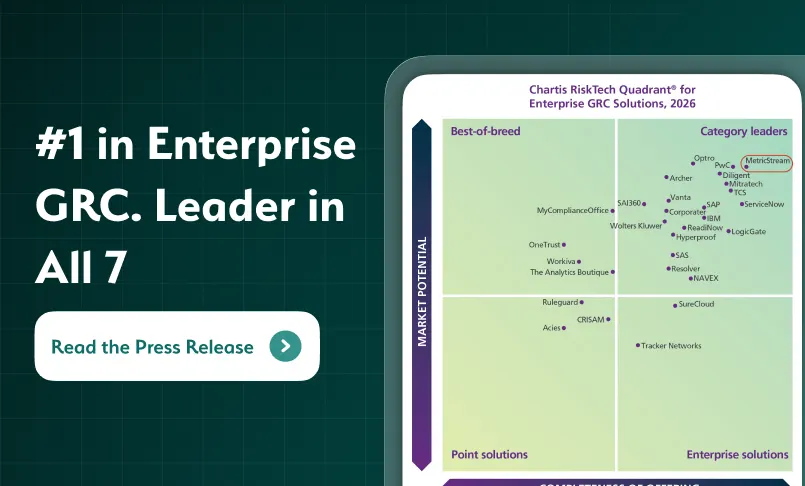
MetricStream is a market-leading Cyber GRC platform that integrates cyber, IT, operational, and third-party risk into a single system. Widely adopted by Fortune 500 companies, it is known for its enterprise-scale deployment and AI-powered insights.
Key Features:
- AI-First IT Risk Management: MetricStream enables organizations to proactively safeguard their business against cyber risks. Powered by AI, the solution streamlines and automates cyber risk assessment, monitoring, and mitigation across IT and OT environments, empowering your enterprise to stay resilient.
- Faster Risk Assessments – Reduce assessment completion time by up to 66%.
- Lower Operational Costs – Achieve 37% savings in risk assessment and related processes.
- Efficient Vulnerability Management – Cut resources needed to scale by 30%.
- Unified Risk Data Repository – Centralize all assets, processes, threats, and vulnerabilities in one place.
- Automated Threat Management – Streamline scanning, risk scoring, and remediation workflows.
- Framework-Aligned Risk Controls – Conduct assessments aligned with ISO 27001, NIST, and other standards.
- Quantified Cyber Risk Insights – Estimate financial impact and simulate potential risk scenarios.
- AI-Driven Issue Resolution – Detect, analyze, and remediate issues automatically with AI.
- Actionable Risk Intelligence – Gain visibility through dashboards, reports, and role-based heat maps.
- Enhanced Governance and Decision-Making – Strengthen compliance, visibility, and prioritization of risks.
MetricStream is ideal for large enterprises operating in heavily regulated industries like banking, energy, and healthcare, seeking deep visibility and automation in their cyber risk programs.
LogicGate Risk Cloud
LogicGate Risk Cloud offers a platform for managing IT and cyber risks. It’s known for its visual workflow builder, making it highly suitable for fast-moving organizations that prioritize agility.
Key Features:
- Drag-and-drop logic builder to create risk scenarios, approval flows, and remediation paths.
- Monte Carlo simulations and financial quantification of cyber risks.
- Integrations with cloud platforms (AWS, Azure) and productivity tools (Google Workspace, Slack).
- Vendor risk assessments, contract reviews, and SLA monitoring.
- Strong role-based access controls and compliance documentation.
Archer IRM (RSA Archer)
RSA Archer helps manage a wide range of issues including IT, operational, and enterprise-level risks, with its robust platform. It supports compliance with multiple frameworks and is configurable to fit complex business needs.
Key Features:
- Modular design with dedicated solutions for IT risk, audit, business continuity, and compliance.
- Comprehensive risk register with custom scoring models.
- Automated control testing, audit trails, and reporting tools.
- Regulatory intelligence feed and compliance tracking.
- Seamless integrations with enterprise apps like SAP, Oracle, and Microsoft 365.
RiskWatch
RiskWatch emphasizes real-time risk scoring and evidence automation. It offers a cloud-based solution focused on risk and compliance for highly regulated industries like healthcare, finance, and manufacturing.
Key Features:
- Continuous compliance tracking for GDPR, HIPAA, ISO 27001, and more.
- Automated evidence collection and audit preparation.
- Third-party/vendor assessment workflows.
- Real-time alerts when compliance thresholds are breached.
- Built-in policy templates and training modules.
Fusion Risk Management
Fusion, best known for resilience planning and real-time event tracking, brings together operational risk, cyber risk, business continuity, and incident response in one integrated platform.
Key Features:
- Scenario planning for disruptions (e.g., ransomware, outages, supply chain failures).
- Predictive insights using AI and incident correlation.
- Root cause analysis and KPI tracking for risk reduction.
- Centralized dashboards for executives and risk owners.
- Full integration with SOC operations and crisis communication tools.
Criteria for Evaluating IT and Cyber Risk Management Tools
Choosing the right IT and cyber risk management tool requires a clear understanding of your organization’s needs, compliance obligations, and risk landscape. Below are 10 parameters to assess when selecting the best-fit solution for 2026 and beyond.
Below are 10 parameters to assess when selecting the best-fit solution for 2026 and beyond.
Comprehensive Risk Coverage
The tool should support a wide range of risks—including cybersecurity threats, third-party risks, regulatory compliance, operational risks, and IT infrastructure vulnerabilities. It should be capable of mapping risks across assets, systems, and departments for a holistic view of your security posture.
Real-Time Threat Intelligence Integration
Look for platforms that integrate live threat intelligence feeds, security incident data, and vulnerability databases. This capability enables proactive risk identification and more accurate prioritization of threats based on their current activity or impact trends.
Customizability and Scalability
Your organization’s risk needs are likely to evolve. A good tool should allow customizable workflows, risk scoring methodologies, and reporting formats. It should also scale seamlessly as your organization grows—whether in users, assets, or regulatory demands.
Automation and Workflow Management
Automation features such as alerting, control testing, remediation tracking, and policy updates significantly reduce manual workloads and error margins. The tool should streamline compliance and risk tasks through automated workflows and escalations.
Integration with Existing Systems
The best tools don’t operate in silos. Ensure the platform integrates with your existing tech stack—such as SIEM tools, cloud platforms, ticketing systems, ERPs, or IAM solutions—so data can flow freely and risk insights are contextualized.
Reporting and Analytics Capabilities
Robust reporting features are essential for internal tracking and external audits. Look for dashboards that offer real-time KPIs, heatmaps, trend charts, and board-ready executive summaries. Bonus points if the tool leverages AI or ML for predictive analytics.
Regulatory and Framework Alignment
A strong tool will support major frameworks like NIST, ISO 27001, GDPR, SOC 2, and CIS Controls. It should offer built-in templates or libraries that help map controls to regulatory requirements, easing compliance documentation and audits.
User Experience and Training Support
Even the most powerful tools fail if they’re hard to use. Prioritize platforms with intuitive user interfaces, role-based dashboards, and robust onboarding or training support. Many vendors now offer in-app tutorials, help centers, or certification programs.
Incident Response and Remediation Support
Effective tools go beyond risk identification. They should facilitate incident response planning, assign corrective actions, and provide clear audit trails. This ensures timely and transparent remediation when security events occur.
Vendor Support and Community Ecosystem
Evaluate the vendor's reputation, support responsiveness, product roadmap, and user community. Tools backed by an active customer base and regular updates often offer more innovation and real-world validation.
Benefits of Using an IT and Cyber Risk Management Tool
Below are the 10 benefits of adopting a dedicated IT and cyber risk management platform.
Centralized Risk Visibility
These tools consolidate risk data from across your IT ecosystem into a unified dashboard. By centralizing information—such as threat intelligence, asset inventories, and compliance checklists—teams gain a comprehensive, real-time view of their risk exposure. This visibility allows for faster identification of high-risk areas and better coordination across departments.
Proactive Risk Detection and Mitigation
With built-in threat intelligence feeds and real-time monitoring, these platforms enable early identification of vulnerabilities and anomalies. Instead of reacting to incidents after they occur, teams can take preventative action, such as patching systems, isolating risky vendors, or adjusting security policies before damage is done.
Streamlined Compliance Management
Meeting multiple regulatory and industry standards (e.g., GDPR, HIPAA, ISO 27001, SOC 2) can be time-consuming and prone to human error. Risk tools often include preloaded compliance templates, control libraries, and audit workflows that significantly reduce the time and effort required to stay compliant, especially during audits or regulatory reviews.
Automation of Manual Processes
From control testing to incident response and reporting, many repetitive tasks can be automated within these platforms. This not only saves time and lowers operational costs but also reduces the chance of oversight or error. Automated alerts, task assignments, and workflow escalations keep risk activities on track with minimal manual intervention.
Improved Cross-Department Collaboration
IT, security, legal, compliance, and executive teams often operate in silos. A centralized risk platform breaks down these barriers by providing role-based dashboards, shared data sources, and integrated workflows. Everyone—from security analysts to C-suite leaders—works from the same playbook, improving communication and accountability.
Enhanced Decision-Making with Data-Driven Insights
Modern risk management tools come with advanced analytics and customizable dashboards that highlight patterns, trends, and emerging risks. Executives can use these insights to make strategic decisions, allocate resources more effectively, and communicate risk exposure to stakeholders and board members with clarity.
Faster Incident Response and Remediation
When an incident occurs, a well-configured risk platform can quickly initiate a pre-defined response plan. Automated incident tracking, role assignments, and escalation workflows help ensure that nothing falls through the cracks. Having a single source of truth during crises significantly reduces response time and operational impact.
Stronger Vendor and Third-Party Risk Management
As supply chains become more complex, third-party risks—like software vulnerabilities or data breaches from vendors—are growing. These tools often include modules to assess, monitor, and manage third-party risk with tools like due diligence workflows, security assessments, and continuous monitoring.
Better Audit Readiness and Documentation
Preparing for internal or external audits can be a scramble without organized records. Risk platforms store audit logs, evidence, policy updates, and control histories in one place. This makes it easier to demonstrate compliance, trace actions, and respond to auditors with confidence and accuracy.
Increased Operational Resilience
Ultimately, these tools don’t just reduce risk—they help organizations bounce back faster when disruptions happen. By embedding risk awareness into everyday operations and enabling proactive planning, they improve long-term resilience and ensure continuity in the face of emerging cyber threats.
Common Challenges in Implementation
While the value of IT and cyber risk management tools is undeniable, the road to successful adoption can be filled with hurdles. Implementation often requires a shift in mindset, infrastructure updates, and coordinated change management. Understanding the typical challenges in advance allows organizations to plan more effectively and ensure smoother deployment.
Here are the 5 most common challenges organizations face:
Change Resistance
Employees who are accustomed to spreadsheets, emails, or legacy GRC systems may view new platforms as disruptive or unnecessary. This inertia can stall adoption unless leaders clearly communicate the value of the new tool and provide hands-on training to ease the transition.
Data Migration Complexity
Risk data is often stored across multiple systems or departments, ranging from spreadsheets and emails to outdated platforms. Consolidating and cleaning this data—while maintaining its accuracy and integrity—requires time, coordination, and often third-party support.
Over-Customization Risks
While customization can improve usability, going overboard often creates overly complex workflows and configurations that are difficult to maintain. These “Frankenstein systems” become fragile over time and hinder future upgrades or scalability.
Skill Gaps
Many teams may not be equipped with the skills needed to utilize the platform’s more advanced features, like predictive analytics, automated testing, or AI-powered alerts. Without upskilling or vendor training, organizations may underutilize the tool's potential.
Integration Hurdles
Legacy IT systems or fragmented tech stacks may not integrate easily with modern platforms. Custom APIs, data mapping, and middleware development can slow down rollout and inflate project costs if not accounted for early on.
Mitigation Strategies
Successful implementations often rely on a few key tactics: phased rollouts that reduce overwhelm, strong vendor support during onboarding and training, and internal champions—such as department leads or IT power users—who advocate for adoption and help troubleshoot issues.
How to Gauge the Success of Implementation
Below are 6 ways to judge if your implementation is successful:
Reduction in Risk Events
One of the clearest indicators of success is a measurable drop in incidents—such as fewer data breaches, audit findings, or compliance violations—compared to pre-implementation levels.
Time Savings
Look for shortened assessment cycles, reduced manual work in audit preparation, and faster incident response timelines. Time saved can be redirected toward higher-value strategic activities.
User Adoption Metrics
High platform engagement—such as regular logins, completed workflows, or cross-functional collaboration—signals that the tool has become embedded in daily operations. Positive user feedback and reduced reliance on external support are also good signs.
Audit and Compliance Scores
Improved audit readiness and faster response to regulatory requests indicate that the tool is helping the organization maintain compliance and demonstrate controls to external stakeholders.
Cost Avoidance
Savings from prevented breaches, minimized fines, avoided service downtime, and lower audit costs can be directly tied back to effective risk management practices powered by the tool.
Visibility and Reporting
Executives and board members using dashboards for decision-making is a strong sign of success. If risk data is actively informing strategy, forecasting, and operations, the tool is doing its job.
Trends Shaping the Future of IT and Cyber Risk Management Tools
The risk landscape is rapidly evolving, and the tools we use to manage it are evolving too. From AI and automation to integrated ecosystems, the next generation of platforms will be more intelligent, interconnected, and user-friendly.
Here are 6 trends to look out for that will have an impact on IT and cyber risk management:
AI-Driven Risk Predictions
Modern platforms are increasingly leveraging machine learning and behavioral analytics to predict risks before they escalate. For example, anomalies in user behavior or early signs of shadow IT usage can trigger automated alerts or risk scoring adjustments.
Unified Platforms
Instead of managing IT, cyber, third-party, and operational risks in separate systems, platforms are becoming integrated ecosystems. This unified approach enables consistent policies, faster correlation of risk events, and a more holistic understanding of organizational exposure.
Cloud-Native Architecture
The shift toward SaaS models continues to grow, with tools designed to be cloud-first, modular, and easily scalable. These systems can be updated more frequently and deployed across distributed teams with minimal friction.
RegTech Integration
As regulations become more dynamic, tools are incorporating RegTech capabilities—such as automated policy updates, change tracking, and AI-based interpretation of regulatory language—to help organizations stay ahead of compliance changes.
Privacy + Security Convergence
With data protection and cybersecurity now intertwined, risk platforms are beginning to support privacy impact assessments, consent management, and data mapping—blurring the lines between traditional security and privacy governance.
Low-Code Automation
To empower business users, many platforms now support drag-and-drop interfaces and low-code tools for building workflows, alerts, and approval loops—enabling risk teams to innovate without relying entirely on IT.
Choosing the right IT and cyber risk management tool is no longer a luxury—it’s a necessity. With ever-increasing threats, regulatory scrutiny, and stakeholder expectations, companies must evolve from reactive risk tracking to proactive, integrated risk management.
Whether you need enterprise-grade Cyber GRC or an agile platform that provides your unique requirements, MetricStream can help you build a secure, resilient, and compliant digital enterprise.
Frequently Asked Questions
IT risk management focuses on operational risks related to technology systems, such as downtime, data loss, or misconfigurations. Cyber risk management deals specifically with external threats like hacking, malware, phishing, and data breaches.
Absolutely. Small and mid-sized businesses are often more vulnerable to cyber threats due to limited IT security budgets. Many modern tools are scalable and cost-effective, making them accessible even to smaller teams.
Implementation timelines can vary based on tool complexity, integrations, and internal readiness. Simple SaaS platforms can go live in 2–4 weeks, while enterprise solutions may take 3–6 months with training and customization.
At a minimum, your tool should support NIST Cybersecurity Framework, ISO/IEC 27001, SOC 2, PCI-DSS, HIPAA, and GDPR. Tools with mapping capabilities across multiple frameworks add greater flexibility and compliance readiness.