


Introduction
Prior to moving to MetricStream to manage their GRC content, our customers would have been either leveraging competitor applications or managing all their data manually via spreadsheets. This huge volume of data would be in different forms and shapes which now needs to flow into our MetricStream system. So, it becomes important for our customers to have a smooth transition from their legacy applications to the MetricStream solution.
MetricStream’s Answer: Data Import & Export
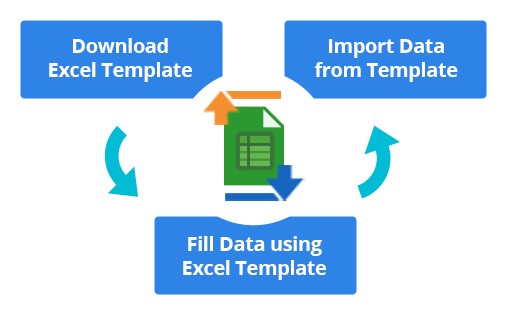
MetricStream provided the “Data Import & Export” spreadsheet-based import framework to push data to our systems seamlessly. This framework allowed:
- Migration of data from legacy systems into the MetricStream system
- Bulk creation and updating of data into records, bulk creation of library objects like Risks, Controls, Processes, Auditable Entities, etc. and import system entities like Users, Organizations, etc.
However, although the existing framework enabled extensive usage, it still presented a few challenges. Our customers were operating with certain limitations around configurability and upgrade safety. And especially while importing high volumes of data, import wait time was high. Hence, rather than adding new features to the existing framework and tuning it, it was identified that developing a brand-new framework from scratch would reap more benefits strategically in the long run, which led to the birth of the “Simplified Data Import & Export” framework.
How Will the “Simplified Data Import & Export” Framework Help?
The new simplified data import & export framework is an effort to overcome the challenges which were faced in the existing framework.
Note: Adoption of Business Rules & Business APIs is a pre-requisite to enable Forms with the new framework.
Developer Community
- A developer tool that will allow to easily configure and upgrade Safe Data Import & Export templates with minimal development effort
- No additional development effort to have the Data Import & Export validations written separately, since the framework now relies on Business Rules, which will act as a common validation layer across Forms and Data Import
- Relying on the BAPI underneath, will make the framework more performant
- Upgrade safe, thereby reducing the time taken to upgrade to future releases or patches